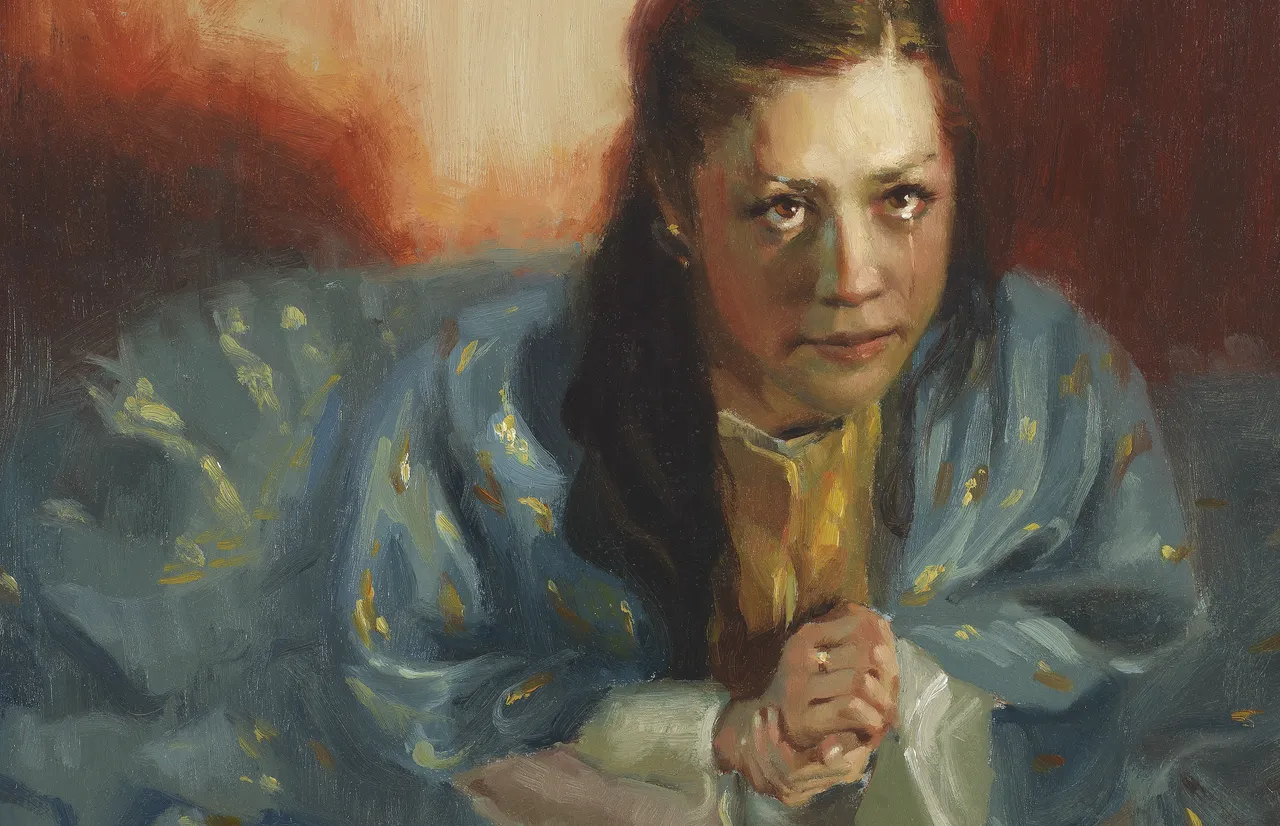
Queen Esther by James Johnson
Each year there is a special Jewish festival called Purim.
From the looks of it, Purim is joyous, rowdy, and almost carnival-like—a little bit Halloween and a little bit very G-rated Mardi Gras. In some of the larger cities there are parades. People dress in costumes, host big dinners, and send gifts of food to friends and neighbors.
And in synagogues, the book of Esther is read aloud—not quietly, either. When Haman’s name is read, people make noise with rattles and noisemakers in an effort to drown his name out.
Purim celebrates the deliverance of the Jewish people from Haman’s plot to destroy them during the time of Queen Esther.
And it is quite a story.
It begins with King Xerxes throwing an enormous celebration—180 days of celebration, to be exact.
And what does a king apparently do after a 180-day party?
He throws an after-party.
During that celebration, Queen Vashti is summoned before the king and his guests. She refuses. The king is furious, and ultimately she is removed as queen.
Eventually the king decides he needs a new queen, and young women from throughout the kingdom are brought into the palace.
One of those women is Esther.
Esther is a young Jewish woman who had been orphaned and raised by her cousin Mordecai. Scripture tells us that Esther was beautiful, and under Mordecai’s direction she kept her Jewish identity secret.
Eventually, of all the women brought before the king, Esther is chosen.
An orphaned Jewish girl becomes queen of Persia.
Meanwhile, Mordecai discovers a plot to assassinate the king and reports it. The king’s life is saved, the event is recorded—and then, seemingly, forgotten.
That little detail becomes very important later.
Then enters Haman—the villain of the story.
Haman rises to a position of enormous power, and people are commanded to bow before him.
Mordecai refuses.
When asked why, his answer is essentially:
“I am a Jew.”
He knows who he is.
He knows whom he worships.
Haman’s pride cannot tolerate Mordecai’s refusal. And rather than simply seeking revenge against Mordecai, Haman decides that all of Mordecai’s people—all the Jews throughout the kingdom—should be destroyed.
A date is chosen by casting lots, or purim, and a decree goes throughout the empire.
The Jewish people are devastated.
Eventually Esther learns what has happened.
And suddenly this young woman who never planned on being queen is faced with a decision she never imagined she would have to make.
She could approach the king and plead for her people.
But there is a problem.
Approaching the king without being summoned could result in her death.
Esther hesitates.
And Mordecai sends her one of the most powerful messages in all of scripture.
Deliverance will come.
God will accomplish His purposes.
But then he asks the question that has echoed through generations:
“Who knoweth whether thou art come to the kingdom for such a time as this?”
Maybe, Esther, this is why you are here.
Maybe everything that has happened has placed you in exactly the position where God can use you.
And something changes in Esther.
She stops focusing only on what might happen to her and begins focusing on what God might accomplish through her.
She asks Mordecai to gather the Jews and fast for her.
And then she says:
“I will go in unto the king, which is not according to the law: and if I perish, I perish.”
I love that sentence.
“If I perish, I perish.”
Esther was not a warrior.
She had not spent her life preparing for some heroic mission. She wasn’t trained for battle. She wasn’t born and raised expecting that someday the lives of thousands of people might depend on her courage.
She was simply a young woman living the life that had been placed in front of her.
And suddenly she was asked to do something terrifying.
Why was she willing to do it?
I think part of the answer is surrender.
To me, surrender means reaching the point where I stop insisting that my life has to unfold according to my plan and become willing to place my life in God’s hands.
Esther did not surrender as a victim.
She surrendered as a disciple.
She didn’t say, “Nothing matters.”
She said, in essence:
“God’s purposes matter more than my fear.”
And I think that is one reason I love Esther so much.
Because God uses the girl who never planned on being there.
And maybe that feels relatable to some of you too.
Maybe you’re the woman who never expected to be called to be president of an auxiliary.
Maybe you’re the oldest child carrying responsibilities in your family that you never expected to carry.
Maybe you’re caring for aging parents.
Maybe you’re raising a child whose needs have changed the life you once imagined.
Maybe you’re the single mother who never imagined doing this alone.
Maybe your life simply looks very different from the life you thought you were signing up for.
We are people of faith.
And over and over again, the Lord teaches us that we have been placed in a particular time and a particular place.
Elder Dieter F. Uchtdorf taught:
“Each of us stands at a unique place and has an important task that only we can perform. The Lord gave you your responsibilities for a reason. There may be people and hearts that only you can reach and touch. Perhaps no one else could do it in quite the same way.”
I believe that.
And part of the reason I believe it is because of my own life.
I went through a brutal decade.
It is a story that would probably make a bestseller, if I’m being honest.
There was intrigue, betrayal, trauma, deceit, pain, illness, passion, beauty, birth, near-death, grief, loss, love—and ordinary life somehow trying to be lived in between all of it.
Some of you in this room lived through parts of it with me.
Some of you think you know my story, and you really don’t.
Some of you know the most intimate details.
Some of you were main characters.
And some of you have absolutely no idea what I am talking about.
But I suspect that, in one way or another, that is true for almost everyone in this room.
We all have a story.
We all have a season of suffering.
An unfair role placed upon us.
A painful past.
A private struggle.
A disappointment.
A grief.
Something we carry that most people cannot see.
Such is life.
Life is messy.
And eventually, most of us arrive at a moment when some part of us cries out:
“I didn’t sign up for this.”
I certainly did.
There were circumstances in my life that changed me so completely that I found myself literally belly-down on the floor in agonizing prayer, pleading with the Lord:
“I didn’t sign up for this.”
But I learned something about floors.
Floors can become very sturdy foundations when God is the contractor.
It was there—when I had run out of my own strength—that the Savior began rebuilding me.
His never-ending love was poured out upon me, often through my family and my closest friends.
His Atonement gave me hope where I thought there wasn’t any.
And little by little, I learned the same kind of surrender that I see in Esther.
I began to understand that:
I am not the Author of my story.
I am a servant of the Author.
And when I finally became willing to let God prevail, I began to find purpose inside the pain.
In my own way, I had to arrive at:
“If I perish, I perish.”
Not because I wanted to perish.
Not because I stopped fighting for healing or happiness.
But because I finally became willing to say:
“Lord, whatever this looks like, I am Yours.”
That surrender became part of what raised me up.
It built my faith.
And the circumstances I once desperately wanted removed from my life have, in many ways, brought me to my own “such a time as this.”
As I climbed out of some of my deepest pain, I found myself in intense therapy and deep spiritual study.
And somewhere along that climb, something unexpected happened.
The things that had wounded me began giving me the ability to recognize wounds in other people.
The things I had learned while rebuilding my own life became things I could use to help someone else rebuild theirs.
Esther 9:22 describes the eventual deliverance of the Jews this way:
“Their sorrow was turned into joy, and their mourning into a good day.”
That scripture feels deeply personal to me.
My sorrow has been turned into joy.
My mourning has become celebration.
I love my life—even the messy parts.
I am grateful for my husband.
I am grateful for my children.
I am grateful for my friends and family whom I cherish.
And I would not be exactly where I am, or exactly who I am, without what I have lived through.
Esther did not face her greatest challenge alone.
And neither did I.
Esther knew who her people were.
And when she became afraid, she did something incredibly important:
She asked for help.
She asked them to fast with her.
They sought the Lord together.
Their faith came before the miracle.
I fasted with some of you during my darkest times.
I leaned on your love and your service when I was incapable of doing very much for myself.
And I prayed.
I prayed for courage.
I prayed for wisdom.
I prayed for the Lord to save me from my circumstances—and sometimes simply to save me from my fear.
And the Lord did not always save me from the experience.
Sometimes He saved me through it.
That is what He did for Esther.
The rest of her story unfolds almost like a drama.
Esther carefully invites the king and Haman to a banquet.
Meanwhile Haman becomes even more enraged with Mordecai and prepares to have him killed.
Then, on one perfectly timed night, the king cannot sleep.
He asks for the royal records to be read to him and discovers that Mordecai—the man who had once uncovered the assassination plot—had never been honored for saving his life.
And this discovery comes at almost exactly the same moment Haman is arriving to ask permission to have Mordecai killed.
You cannot make this stuff up.
Eventually Esther finds the courage and the opportunity to tell the king who she really is.
She tells him that she is Jewish.
She exposes Haman’s plan.
Haman falls.
A new decree is issued allowing the Jewish people to defend themselves.
And the people who had been condemned to destruction are delivered.
The very date that Haman had selected by casting lots becomes part of the celebration of his defeat.
And that is why the festival is called Purim.
What was intended for destruction became a celebration of deliverance.
What looked like coincidence became providence.
What looked like the end of Esther’s story became the reason her story has been told for thousands of years.
And all of it turned on the willingness of one young woman to say:
“If I perish, I perish.”
To surrender.
To trust.
To act.
To believe that perhaps she really had been placed there:
“For such a time as this.”
I want to be more like Esther.
Brave.
Faithful.
Wise.
Creative in solving difficult problems.
Willing to ask for help.
Willing to surrender my plans when God has something different in mind.
Willing to be the girl who says:
“I didn’t sign up for this.”
And then goes forward in faith anyway.
My testimony is this:
God lives.
Jesus Christ is my Savior.
And God is the Author.
I believe that I, too, have been called to live in a time such as this.
I believe that some of the things I have lived through have prepared me to help people who may be a few steps behind me on the same path.
Because I have mourned, I can mourn with those who mourn.
Because I have needed someone to sit beside me in the darkness, I can sit beside someone else.
Because I have had to rebuild, I can share what I learned while rebuilding.
And because I know what it feels like to desperately need the Savior, I can testify that He is there.
Maybe that is one of the great purposes of mortality.
We learn.
We suffer.
We grow.
We surrender.
We come to know Christ.
And then we turn around and lift someone else.
The Lord placed Esther in a position where her experience, her courage, and her influence could bless other people.
I believe He does the same with us.
Sometimes the very circumstance we wish had never happened becomes the place from which we are able to bless someone else.
Our lives don’t always turn out the way we planned.
Sometimes we find ourselves looking toward heaven saying:
“I did not sign up for this.”
And perhaps in those moments, the Lord whispers back:
“I know. But I am here. And perhaps you have come to this place for such a time as this.”
Esther taught me that discipleship is not always knowing why.
Sometimes it is simply trusting Who.
And then going and doing.
I testify that as we surrender our lives to Jesus Christ, He can take even our sorrow and turn it into something holy.
He can turn mourning into joy.
He can turn wounds into compassion.
He can turn fear into faith.
And He can take ordinary people who never expected to be where they are and use them to accomplish extraordinary good.
In the name of Jesus Christ, amen.